 Hudson County Criminal Lawyer Blog


 The Supreme Court of New Jersey’s decision in the case of State v. Curtis L. Gartrell presents a significant analysis of property rights and the Fourth Amendment’s protections against unreasonable searches and seizures. In this case, the court examined the concept of abandonment in the context of a police chase, where the defendant fled and left behind a suitcase containing illegal substances. By abandoning the suitcase, Gartrell relinquished any privacy interest he had in the item, thereby negating his ability to challenge the police’s warrantless search of the suitcase.
The decision underscores a critical point for both legal professionals and the general public: the act of abandoning property, especially during a police encounter, can have profound implications on one’s constitutional rights. The court’s analysis provides a nuanced understanding of how actions taken in the heat of the moment can lead to the forfeiture of rights to privacy and the protection against unwarranted governmental intrusion.
This case is a stark reminder of the legal complexities surrounding searches and seizures, and it serves as a crucial point of discussion for those interested in criminal law and constitutional rights. It also highlights the judiciary’s role in interpreting and applying legal principles to specific factual contexts, offering valuable insights into the balance between law enforcement interests and individual rights.

 In a landmark decision, the New Jersey Supreme Court weighed in on a crucial issue of first impression: Must a criminal defendant be provided in-person interpreting services during a jury trial, or will video remote interpreting (VRI) suffice? The case of State v. Juracan-Juracan dives into this question, addressing a major point of contention within the legal community—especially given the significant adjustments courts have had to make in response to the COVID-19 pandemic.
 Attorney Stephen Natoli successfully argued before a three-judge panel that his client’s rights had been violated during a 2019 trial handled by prior counsel. Following the trial, Defendant was sentenced to twenty-three (23) years in prison. He had been serving his prison sentence when he retained Mr. Natoli for his appeal.
 Under the Sixth Amendment of the United States Constitution and the laws of New Jersey, suspects are entitled to have an attorney present while they are held in custody for questioning.
 Three Strikes Laws were adopted in certain jurisdictions to protect the public from habitual offenders who repeatedly commit certain violent crimes. These law typically mandate a sentence of life imprisonment without parole for a third-time offender.
 The United States Supreme Court determined in Maryland v. Buie that a protective sweep made during an in-home arrest is only justified when (1) officers can, as a precaution, search areas immediately adjoining the area of arrest if they are areas from which an attack can be immediately launched, and (2) officers can look beyond those adjoining spaces if that search is based on articulable facts that would make reasonably prudent officer believe there is a threat.
 Witness “impeachment” refers to the process of attacking a witness’s credibility and the accuracy of their testimony at trial. The Federal Rules of Evidence and the New Jersey Rules of Evidence both allow the impeachment of a witness’s credibility by use of their prior convictions. However, when the witness is a defendant testifying in their own trial, there are specific rules that apply to the State’s use of their prior convictions.
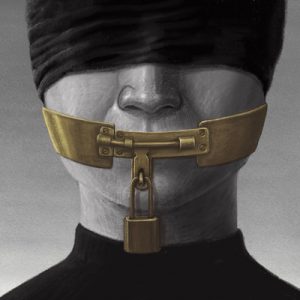 On December 9, 2021 the New Jersey Appellate Division published a decision which struck down a portion of New Jersey’s terroristic threats statute. In