 Hudson County Criminal Lawyer Blog


 Search warrant cases often turn on major constitutional questions, but sometimes they come down to something much simpler: whether the State got the basics right on the face of the application. In a published decision issued on March 5, 2026, State of New Jersey v. Carlene Harris and Norman A. Thomas 4th, the New Jersey Appellate Division made clear that courts will not rescue a defective warrant by rewriting it after the fact. In this case, the warrant certification listed the key investigative events with dates that made the information stale, and the State later argued those dates were merely typographical errors. The Appellate Division rejected that argument, holding that probable cause must be evaluated from the four corners of the application itself, not from explanations offered later once the defect is exposed.
The case arose out of a drug investigation in Lakewood. According to the certification submitted in support of the search warrants, officers met with a confidential informant during the week of January 29, 2022, and then conducted controlled buys during the weeks of February 19, 2022, and February 26, 2022. Based on those events, police sought warrants in March 2023 to search two apartments, a vehicle, and a person. But the problem was obvious: if the dates in the certification were taken at face value, the key investigative activity had taken place more than a year earlier, making the information stale for probable cause purposes.
The State argued that the year “2022” was simply a typographical error and that the events actually happened in 2023. It also tried to support that position with police reports submitted later and asked for the opportunity to prove the mistake at a hearing. The trial court rejected that approach, suppressed the evidence, and the Appellate Division affirmed. The panel held that the validity of the warrants had to be judged based on what was actually presented to the issuing judge, not on what the State later wished had been included.
 New Jersey’s Compassionate Release Act is supposed to do one thing well. It exists to ensure incarceration does not become a death sentence for someone who is seriously ill, medically vulnerable, or otherwise unable to be safely housed. The New Jersey Supreme Court’s decision in State v. Celestine Payne is a reminder, though, that medical eligibility is not the end of the analysis. Even when a person meets the statute’s medical requirements and shows low public safety risk, release remains discretionary. The State can still defeat the motion if it proves extraordinary aggravating circumstances.
 The New Jersey Supreme Court’s decision in
  The New Jersey Supreme Court’s December 4, 2025 decision in State v. Caneiro is a big reminder that “exigent circumstances” is not a slogan courts apply in hindsight, but an objective, fact-sensitive test grounded in what officers reasonably knew in the moment. Here, the Court focused on whether the exigent-circumstances exception applied during an active house fire, where officers believed that getting a warrant was impracticable and immediate action was needed to prevent the destruction of evidence located in an attached garage.
 In State v. Juan C. Hernandez-Peralta (decided July 22, 2025), the New Jersey Supreme Court answered a practical question that comes up all the time in criminal practice: how far does a defense lawyer have to go to investigate a client’s immigration status? The Court held that, on the facts of this case, sentencing counsel was not constitutionally ineffective for asking, “Are you a U.S. citizen?”, getting a clear “yes”, and relying on that answer, even though the client later turned out to be a noncitizen who faced deportation.
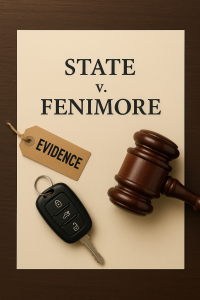 The New Jersey Supreme Court has continued to reinforce the strength of our State Constitution’s warrant protections in its recent decision, State v. Fenimore. The Court unanimously held that the automobile exception does not permit police to conduct a warrantless search of a vehicle once law enforcement has full control over the car, its occupants, and the surrounding environment. In Fenimore, the defendant had been arrested for DWI inside a State Police barracks, the passenger had been removed, officers had possession of the keys, and the vehicle was required to be held for a mandatory twelve-hour impound period under John’s Law. Despite these circumstances, where mobility, safety concerns, and the risk of evidence destruction were completely neutralized, the State Police searched the car in the station parking lot without obtaining a warrant.
 The New Jersey Supreme Court recently issued a major ruling that reshapes how courts and prosecutors must apply the state’s strict Graves Act sentencing rules for gun offenses. In State v. Zaire J. Cromedy (decided August 5, 2025), the Court unanimously held that a conviction under N.J.S.A. 2C:39-5(j), which makes it a first-degree crime for someone with a prior No Early Release Act (NERA) conviction to unlawfully possess a weapon, is not automatically subject to the Graves Act’s mandatory parole-ineligibility period.
 The Supreme Court of New Jersey’s decision in the case of State v. Curtis L. Gartrell presents a significant analysis of property rights and the Fourth Amendment’s protections against unreasonable searches and seizures. In this case, the court examined the concept of abandonment in the context of a police chase, where the defendant fled and left behind a suitcase containing illegal substances. By abandoning the suitcase, Gartrell relinquished any privacy interest he had in the item, thereby negating his ability to challenge the police’s warrantless search of the suitcase.
 In New Jersey, a criminal defendant’s right to a jury trial is guaranteed by both the Sixth Amendment to the United States Constitution and the State Constitution. The principles of fairness and justice are encompassed in the roles assigned to the judge and the jury. The jury, otherwise known as the “finder of fact,” is tasked with determining what happened in a specific case and how those facts are relevant to the legal proceeding. The judge, otherwise known as the “trier of law”, is tasked with making legal rulings and ensuring that legal proceedings adhere to specific guidelines.