 Hudson County Criminal Lawyer Blog


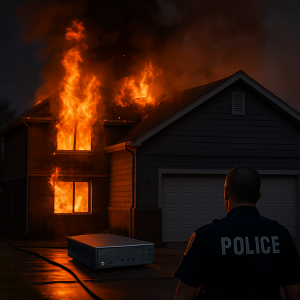 The New Jersey Supreme Court’s December 4, 2025 decision in State v. Caneiro is a big reminder that “exigent circumstances” is not a slogan courts apply in hindsight, but an objective, fact-sensitive test grounded in what officers reasonably knew in the moment. Here, the Court focused on whether the exigent-circumstances exception applied during an active house fire, where officers believed that getting a warrant was impracticable and immediate action was needed to prevent the destruction of evidence located in an attached garage.
The case arises from a 5:02 a.m. house fire at Paul Caneiro’s home in November 2018. While firefighters were still battling an active blaze in the main structure, police entered the attached garage and seized a security system DVR without a warrant, about forty minutes after first arrival and roughly thirty minutes after the small garage fire had been extinguished. The State alleges the DVR captured Caneiro disconnecting the security cameras before starting the fire. Later, the defendant gave valid consent to search the DVR’s contents. The trial court suppressed the DVR, stressing that the garage fire had been out for nearly thirty minutes and characterizing the officers’ retrieval as calm and deliberate. The Appellate Division affirmed.
The Supreme Court unanimously reversed, holding that under the totality of circumstances, the warrantless seizure was objectively reasonable because time was of the essence and securing a warrant was impracticable while the fire remained active and suppression efforts threatened the integrity of sensitive digital evidence. The Court looked at the whole scene, not just the garage in isolation, and rejected the idea that officers’ calm demeanor meant there was no real emergency. The question, it emphasized, is not how things look in a quiet courtroom years later, but what a reasonable officer on that chaotic scene could conclude at the time.